
EN

Mini Facelift
Modern SMAS and Deep Plane techniques for natural and long-lasting results for early signs of facial aging.
Mini Facelift
Not every facial rejuvenation requires a full facelift. For patients with early signs of aging, a Mini Facelift can be a natural way to refresh facial contours while preserving individual expression.
What is a Mini Facelift?
A Mini Facelift is a modern form of facial rejuvenation particularly suited for patients who notice the first signs of facial aging but do not wish or need a comprehensive surgery. It focuses on early changes in the mid and lower face, as well as a natural improvement in facial contours.
What sets me apart from many colleagues: I do not limit myself to superficial skin tightening even in smaller facelift procedures. Whenever anatomically sensible, I apply modern SMAS or Deep Plane principles in the Mini Facelift – techniques that involve the deeper tissue structures of the face.
The result is often more natural and long-lasting than purely superficial methods. My goal is not to create a different face but to specifically address early signs of aging while preserving your individual expression.
Is a Mini Facelift the correct treatment for you?
That is decided by anatomy, not by age. Ask your question directly on WhatsApp – no appointment needed. Or arrange a consultation straight away.
What changes does a Mini Facelift correct?
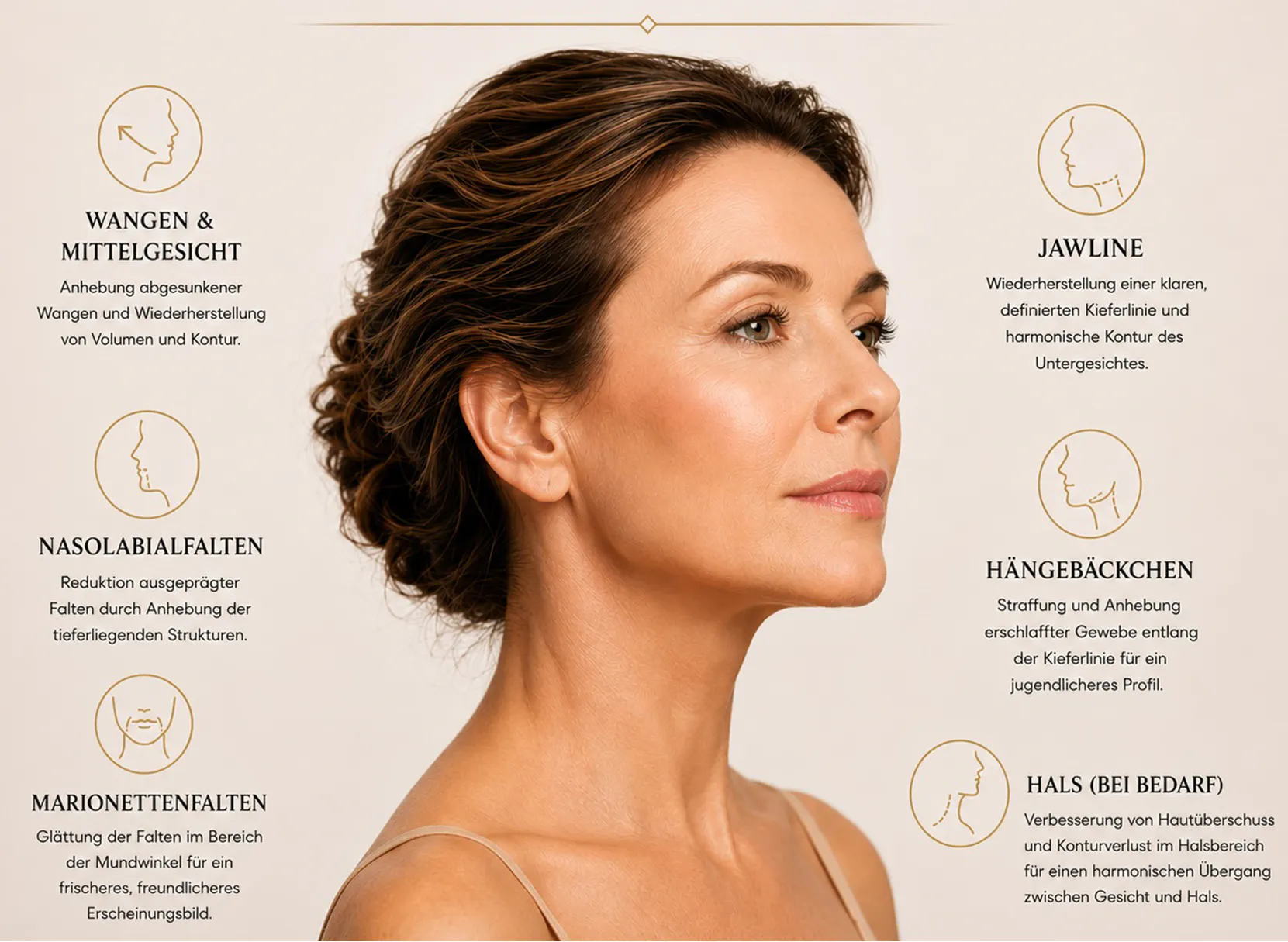
As we age, the first changes in the face become noticeable: the contours appear less well-defined, the jawline loses sharpness, and early jowls begin to form. Many of my patients describe feeling tired or less fresh in appearance, even though they feel just as they did before. This is where the Mini Facelift comes in.
The Mini Facelift is particularly suitable for patients with early to moderate signs of aging in the mid and lower face. Often, slightly younger patients choose this procedure when the first signs of tissue sagging should be treated surgically, seeking more sustainable results than purely minimally invasive procedures can offer.
A Mini Facelift can help with the following:
reducing early jowls
defining the jawline more clearly
correcting early contour losses in the mid and lower face
treating mild sagging in the cheek area
counteracting a tired, exhausted appearance
Whether a Mini Facelift is the right choice or whether a more comprehensive procedure like a Deep Plane Facelift would be more appropriate depends less on biological age and more on individual anatomy and the actual extent of aging changes. We will discuss this together during the consultation.
Which facelift method is right for me?
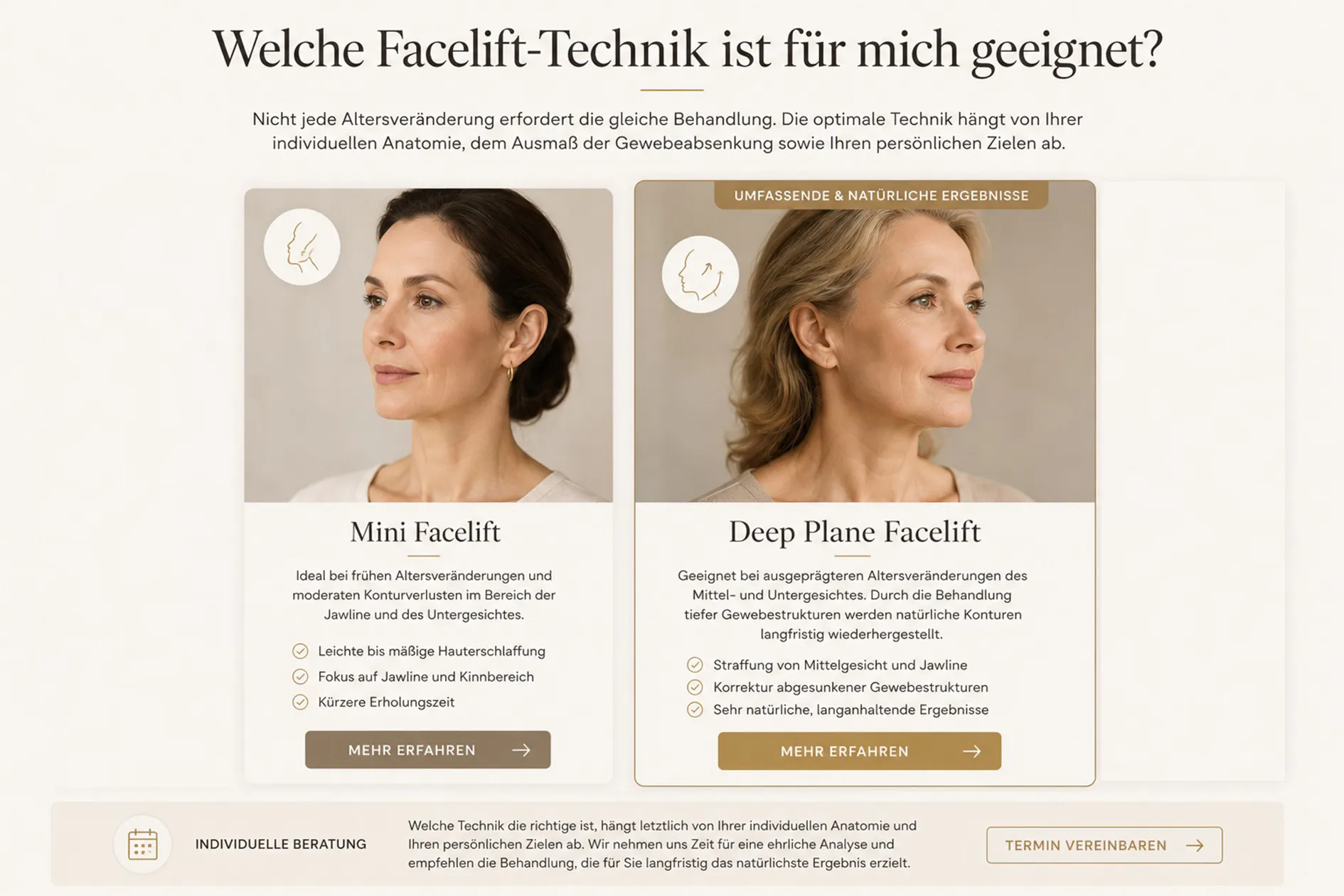
Not every age-related change requires the same treatment. The optimal technique depends on your individual anatomy, the extent of tissue sagging, and your personal goals. Both a mini facelift and a deep plane facelift can achieve excellent and natural results—provided the right technique is chosen for the right patient.
Ultimately, which method is right does not depend solely on biological age. What matters more are your individual anatomical conditions, the quality of the tissue, and your personal wishes. During a detailed consultation, we will decide together which procedure is best suited to achieve a natural and long-lasting harmonious result.
Process of a Mini Facelift at SA Aesthetics

Individual analysis instead of a standard solution
Every face ages differently. Therefore, each treatment begins with a detailed analysis of the facial anatomy, aging processes, and your personal wishes and expectations. The goal is to develop an individualized treatment plan that respects your facial features and allows for natural results.
Precise surgical planning
Before the procedure, the relevant facial regions are analyzed, and the planned repositioning of the tissue structures is individually determined. The focus is not on individual wrinkles, but on restoring harmonious facial contours and natural proportions.
Execution of the Mini Facelift
The procedure is performed in our modern practice clinic in Berlin under general anesthesia and typically lasts two to three hours, depending on the initial condition. The incision is planned so that the resulting scars run as inconspicuously as possible along the natural contours of the ear. The deeper anatomical structures are mobilized and returned to their original position—not just the skin surface is tightened. In many cases, the procedure can be performed on an outpatient basis. However, depending on the individual condition, a short inpatient stay may also be advisable.
Aftercare and recovery
After the procedure, there will be close follow-up care. Swelling and bruising are normal in the first few days and gradually subside during the healing process. Through regular check-ups, we support our patients throughout the entire healing process and are available for any questions at any time.
Healing & recovery time after a Mini Facelift
Compared to a comprehensive deep plane face and neck lift, the recovery time after a mini facelift is often somewhat shorter. Nevertheless, the tissue needs sufficient time to heal and adjust to its new position. Even with smaller facelift procedures, patience and strict adherence to aftercare recommendations are crucial for an optimal result.
The healing process in the first weeks
- Light walks are explicitly encouraged from the very first day after the surgery.
- After a few days, light daily activities are usually possible without any issues.
- After about 10–14 days, most patients feel socially acceptable again.
- Intensive physical exertion and sports should generally be avoided for about three to four weeks.
- Swelling and mild bruising may occur in the first weeks and usually subside gradually.
While initial changes become visible early on, the final result develops gradually over the following weeks and months.
Results and durability of a Mini Facelift

The goal of a mini facelift is not to create a new face. Rather, it aims to correct early signs of aging and restore lost facial contours. A successful result should make patients appear fresher, more rested, and younger, without changing their individual charisma.
I often ask many of my patients to bring older photographs to their consultation. They help to understand how the face has changed over the years and which features define their personality and charisma. The goal is not to make you someone else, but to restore the more natural and younger version of yourself.
Naturalness and Expression
How long does a mini facelift last?
Risks and Possible Complications of a Mini Facelift
Like any surgical procedure, a mini facelift carries general and procedure-specific risks. Careful surgical planning, modern surgical techniques, and strict adherence to aftercare recommendations help minimize these risks. All individual risks and specifics will be thoroughly discussed in the personal consultation.
Risk Minimization Through Surgical Expertise
A mini facelift, like more extensive facelift procedures, requires surgical precision, careful analysis, and individually tailored surgical planning. The goal is to achieve natural results with the highest level of safety.
Chief Physician Themistoklis Stavrakis, M.D., a specialist in Plastic and Aesthetic Surgery, has been intensively involved with modern SMAS and Deep Plane facelift techniques for many years. Each treatment is individually planned and tailored to the patient's personal anatomy and aesthetic goals.
Equally important as the surgery itself are structured aftercare and regular follow-up appointments. Close supervision before, during, and after the procedure allows for monitoring healing processes and early detection of potential issues.
If you would like to consult about a mini facelift, please feel free to schedule a personal appointment at our practice in Berlin. We take the time to answer your questions and discuss openly whether and which method is suitable for you.
Combinations with Other Procedures
A mini facelift can be combined with additional procedures if needed, to achieve the most harmonious and natural overall result. Which combination is sensible depends on individual anatomy, the extent of age-related changes, and personal treatment goals.

My philosophy behind a natural facelift
Throughout my training and my work as a plastic surgeon, I have developed my own philosophy of facial rejuvenation. For me, a facelift is not about creating a new face or stopping time. Rather, I see my role as understanding age-related changes, restoring lost contours as naturally as possible, and preserving the individual personality of a person. In my view, a successful facelift is not recognized by someone looking operated on. Ideally, friends, family, or colleagues simply perceive that a person looks fresher, more rested, and more vital, without being able to pinpoint the cause directly. Regardless of whether a mini facelift, a SMAS facelift, or a deep plane facelift is performed, I follow the same fundamental principles for every facial surgery: maximum safety, natural results, long-term outcomes, and an individualized treatment that respects the personality and anatomy of each patient.
Frequently asked questions about the mini facelift
There is no specific age at which a mini facelift makes sense – what matters are the individual changes and personal distress. Often, slightly younger patients choose this step when the first signs of tissue sagging become visible and they desire a longer-lasting solution than purely minimally invasive treatments can offer.
Typical changes that may indicate a mini facelift include: — a beginning loss of jawline definition — first jowls — slight sagging in the lower third of the face — early contour losses in the cheek and jawline area — a beginning double chin or slight blurring between the face and neck. Whether a mini facelift is sufficient or a more extensive procedure, such as a deep plane facelift, would be more sensible depends on the individual anatomy and the extent of the changes, not on biological age.
The term primarily describes the smaller extent of the procedure compared to a comprehensive face and neck lift. The focus is on early signs of aging in the lower third of the face – often with shorter incisions and somewhat shorter recovery times. Less extensive does not mean less precise. Even in a mini facelift, I use modern techniques – with the goal of achieving natural and long-lasting results.
No – at least not if everything goes as I envision for my patients. A modern mini facelift is not meant to create a new face, but to gently correct early signs of aging and restore natural facial contours. The result: a fresh, rejuvenated appearance – and your individual radiance remains fully intact.
The incision is planned from the very beginning to ensure that the resulting scars are as inconspicuous as possible. Typically, the incision starts at the temple area, follows the natural folds of the ear, and ends behind the earlobe. Compared to more extensive procedures, the incision for a mini facelift is often somewhat shorter. Once healing is complete, the scars are usually barely noticeable.
Yes – and this is important to me for every procedure. A modern mini facelift should not change your facial features or restrict your expressions. The goal is to restore your natural contours while preserving your individual personality and expressiveness.
In many cases, yes – patients can leave the clinic on the same day. However, depending on individual findings and the extent of the procedure, an inpatient stay may also be advisable to ensure optimal care. We will discuss this together in advance.
Most patients feel comfortable returning to social activities after about 10 to 14 days. Light swelling or bruising may be visible for varying lengths of time – but they will gradually subside. I will support you step by step during this phase.
I recommend light walks as early as the first day after the surgery – early mobilization is explicitly encouraged. Light daily activities are usually possible again after a few days. You should avoid more intense exercise for about three to four weeks to not jeopardize the healing process. We will clarify exactly when what is allowed during follow-up appointments.
Most patients report more of a feeling of tension than severe pain. Any discomfort can be well managed with pain medication and typically subsides continuously over the first few days. You are not alone during this time – our team is always here for you.
Yes. In cases of early signs of aging in the neck area, a mini facelift can be effectively combined with a neck lift. The right combination depends on the extent of tissue sagging as well as your individual wishes and anatomical conditions – we will discuss this together.
Not every patient requires a comprehensive deep plane facelift. While the mini facelift is the right choice for early signs of aging, more extensive procedures may be more suitable for pronounced changes in the midface, lower face, and neck area. Which method is right for you can only be assessed individually – that’s exactly what the consultation is for.
Yes. Previous treatments with fillers, neuromodulators, or other aesthetic procedures do not fundamentally exclude a mini facelift. In the consultation, I will assess individually which prior treatments should be considered – and which approach is likely to yield the most natural result.
Chief Physician Themistoklis Stavrakis, M.D.
Specialist in Plastic and Aesthetic Surgery
Years of experience in plastic and aesthetic surgery, along with a special focus on deep plane facelift and deep plane neck lift, shape the professional career of our founder. His previous role as chief physician at a renowned German clinic, along with solid experience in microsurgical techniques, forms the basis for a precise and individually tailored treatment approach.
Deep Plane Minilift, facelift, and neck lift are among the special areas of expertise at our practice clinic in Berlin. This procedure allows for treatment at a deeper tissue level – far beneath the skin – achieving more natural and long-lasting results than superficial techniques. The focus is always on natural proportions, a harmonious facial and neck contour, and a result that fits the individual anatomy and personality of the patient.
Each treatment is tailored to the anatomy, tissue quality, and personal wishes – with the goal of harmoniously combining naturalness and form.
Individual consultation instead of standard treatment
Every face and neck is unique, and we treat it as such. We do not offer standard solutions. We listen to you, learn about your wishes and ideas, and develop a treatment concept that is individually tailored to you.
Microsurgical Experience & Precision
The Deep Plane technique requires a deep anatomical understanding and the highest surgical precision. Our extensive experience in microsurgical techniques allows for targeted treatment of deep tissue layers – resulting in natural and long-lasting outcomes.
State-of-the-Art Surgical Techniques & Structured Aftercare
We utilize advanced surgical techniques for precise and long-term results. Our aftercare is thorough and structured – we are available for your questions at any time after the procedure.
Patient-Centered Approach at SA Aesthetics
Your well-being is at the center of our practice clinic in Berlin. A personal atmosphere and the highest medical standards ensure that you feel well taken care of at SA Aesthetics.
Take the first step and schedule a non-binding consultation appointment. We look forward to seeing you.
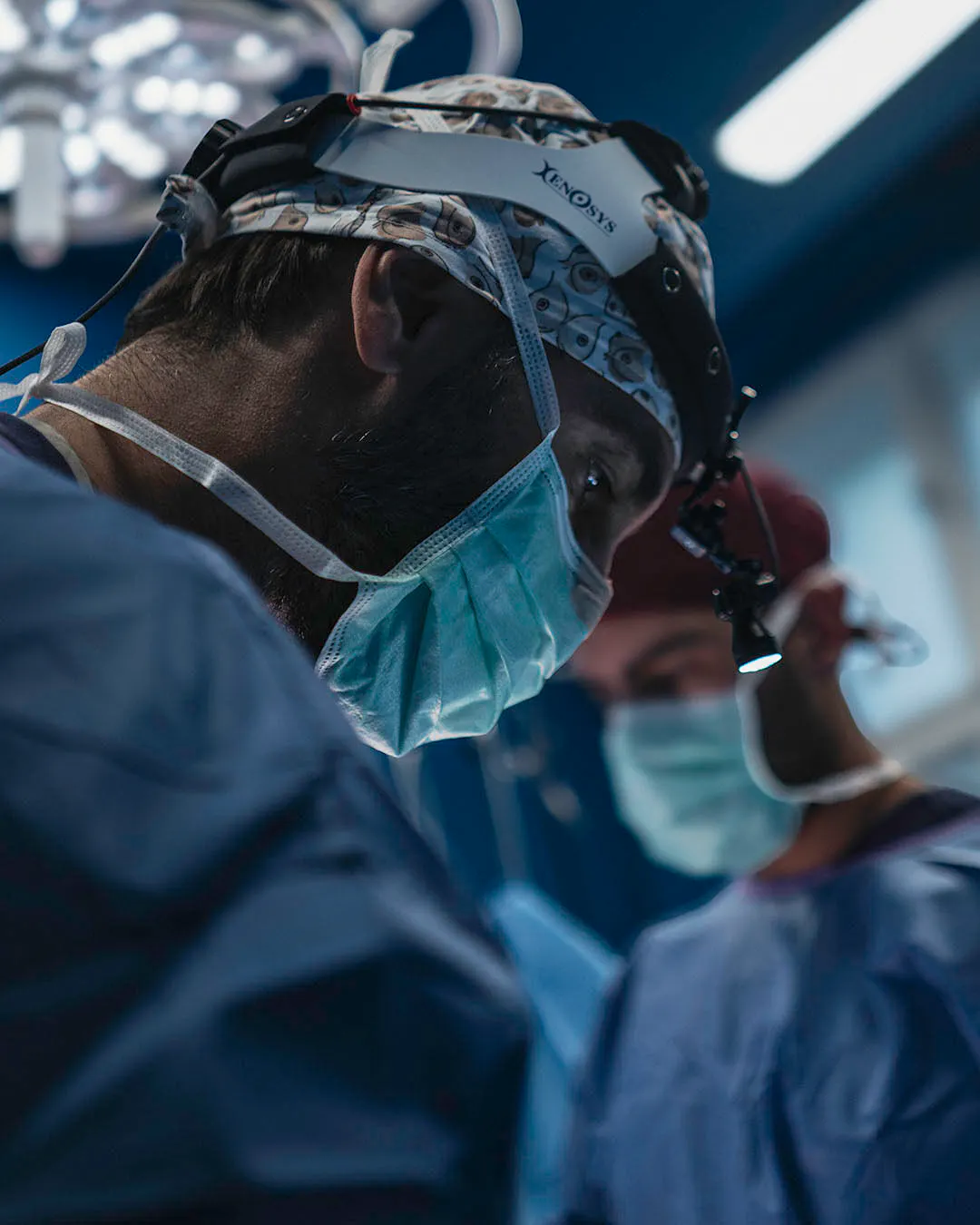
Do you have questions about the Deep Plane Minilift or want to know if a procedure is right for you? I would be happy to personally advise you at our practice clinic in Berlin.
You Might Also Be Interested In
Discover more treatments with us.