

Gynecomastia or Fat?
Delve into the causes of an enlarged male breast.
What is Gynecomastia?
Gynecomastia refers to the enlargement of the male breast due to an increase in breast glandular tissue. It can occur unilaterally or bilaterally and affects men of various ages – from puberty to older adulthood.
Many affected individuals notice a change in breast contour, a protrusion in the area of the nipple, or an overall more feminine breast shape. This often leads to feelings of insecurity, shame, or the desire to avoid certain clothing or physical activities.
Gynecomastia is one of the most common changes in the male breast and is benign in most cases. However, any newly occurring enlargement of the male breast should be medically examined to clarify possible causes and distinguish between true gynecomastia and other changes.

Gynecomastia or Fat? The Important Difference
Not every enlarged male breast is true gynecomastia. Often, there is instead an excess of fatty tissue in the breast area. This form is referred to as lipomastia or pseudogynecomastia.
While true gynecomastia involves an enlargement of the breast glandular tissue, lipomastia is predominantly composed of fatty tissue. In many cases, a mixed form of fat and glandular tissue is also found.
The distinction is crucial, as it determines the optimal treatment. While lipomastia can often be adequately addressed with liposuction, true gynecomastia usually requires the targeted removal of excess glandular tissue. During the examination, palpation findings, ultrasound, and individual anatomy can help accurately determine the cause of the enlarged male breast.
How Common is Gynecomastia?
Gynecomastia is significantly more common than many men assume. According to the German Society of Plastic, Reconstructive, and Aesthetic Surgeons (DGPRÄC), temporary gynecomastia occurs in nearly 50% of adolescents during puberty.
Even in adulthood, enlarged male breasts are relatively common. Depending on age and study, up to 30–65% of men experience some form of gynecomastia in their lifetime.
Especially during hormonal transition phases – such as puberty or older age – breast glandular tissue can enlarge. Many pubertal forms resolve within months to a few years.
Not every enlarged male breast requires treatment. However, if the change is persistent or leads to physical or psychological distress, an individual assessment and possibly surgical correction may be advisable.
Causes of Gynecomastia
Gynecomastia can have various causes. In many cases, it arises from an imbalance between the hormones testosterone and estrogen, leading to an enlargement of the breast glandular tissue. However, a clear cause is not always identifiable. Often, multiple factors play a role simultaneously. Therefore, it is important to determine the underlying cause as accurately as possible for the choice of the appropriate treatment.
Symptoms and Diagnosis
The symptoms of gynecomastia can vary in severity. While some men notice only a slight protrusion in the area of the nipple, others suffer from a significantly enlarged male breast with visible changes in breast contour.
In addition to physical changes, many affected individuals report decreased self-esteem, insecurity during sports, or discomfort in situations where the upper body is exposed.
Typical Signs of Gynecomastia
The most common symptoms include:
Enlargement of one or both breasts
Protrusion in the area of the nipple
Palpable glandular tissue behind the nipple
Feeling of pressure or increased sensitivity
Asymmetrical breast shape
Changes in breast contour despite normal body weight
Symptoms can occur unilaterally or bilaterally and can vary in intensity.
Diagnosis of Gynecomastia
When should you see a doctor?
Not every change in the male breast requires treatment. However, if symptoms occur newly, increase, or persist over a longer period, a medical examination should be conducted.
Especially in cases of unilateral changes, pain, palpable lumps, or rapid increases in size, a thorough evaluation is advisable to rule out other causes.

How is gynecomastia diagnosed?
The diagnosis of gynecomastia is based on the current recommendations of the German Society of Plastic, Reconstructive and Aesthetic Surgeons (DGPRÄC) as well as the S1 guidelines for gynecomastia. The goal is to accurately determine the cause of the enlarged male breast and to differentiate between true gynecomastia, lipomastia, or a mixed form.
A key component of guideline-compliant diagnostics is a detailed medical history and a thorough physical examination. Even the palpation of the breast provides important clues as to whether there is predominantly glandular breast tissue, fatty tissue, or a combination of both. The distribution of the tissue, possible asymmetries, and the texture of the breast are also assessed.
Additionally, an ultrasound examination may be performed to analyze the composition of the tissue more precisely and to rule out other changes. In particular, distinguishing between true gynecomastia and lipomastia is crucial for choosing the optimal treatment.
Depending on the findings, hormone analyses or further internal medicine or endocrinological examinations may also be useful to clarify possible hormonal or organic causes of gynecomastia.
Thorough diagnostics form the basis of every successful treatment. Only when the cause and composition of the enlarged male breast have been clearly determined can a decision be made as to whether conservative therapy, liposuction, removal of glandular breast tissue, or a combination of various procedures is appropriate.
What treatment options are available?
The treatment of gynecomastia depends on the cause, the extent of the change, and the individual level of distress. Initially, it is crucial to accurately distinguish between true gynecomastia with increased glandular breast tissue, lipomastia, or a mixed form.


Procedure for a gynecomastia operation at SA Aesthetics
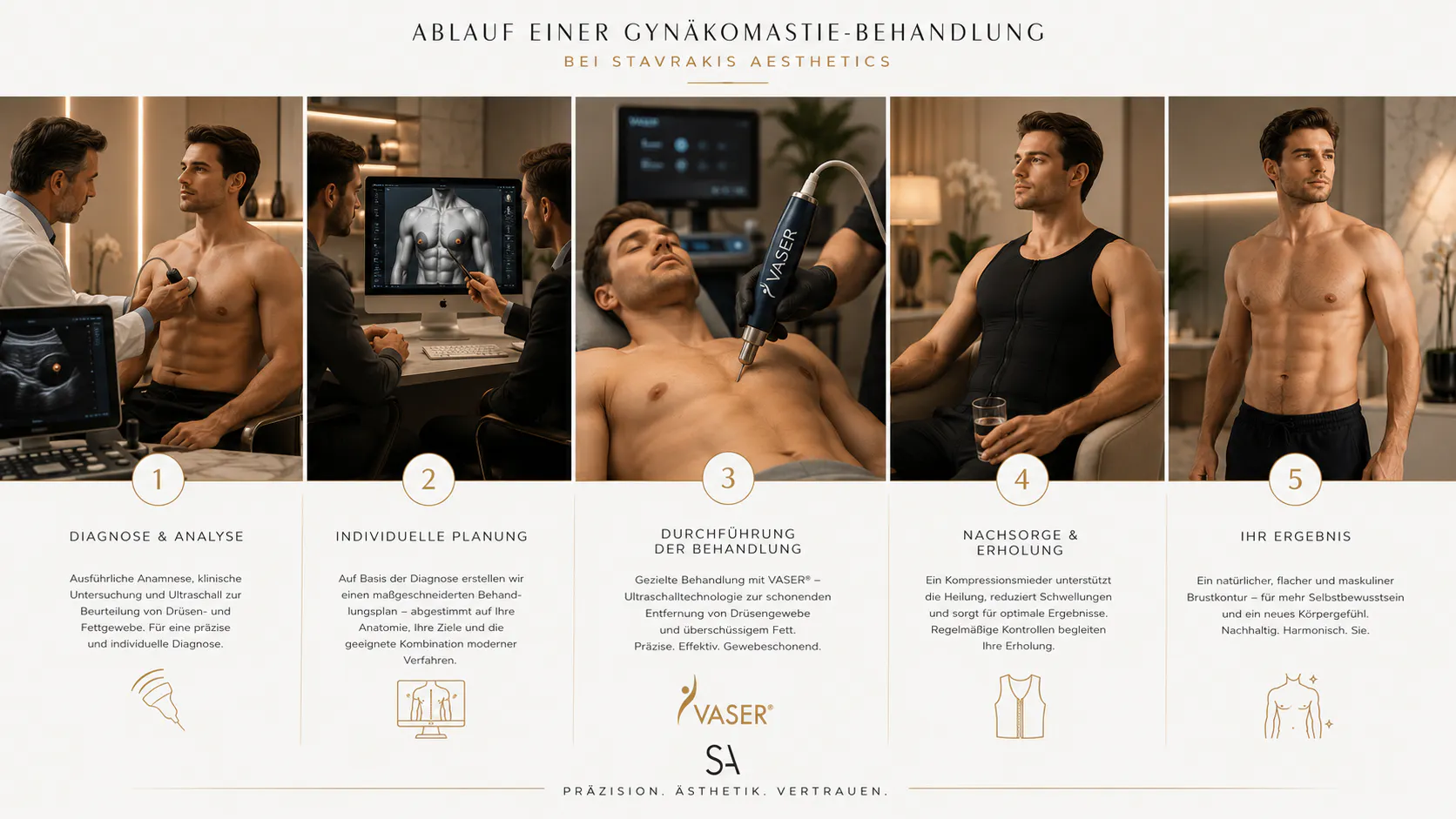
Every case of gynecomastia is uniquely expressed and requires individualized treatment planning. Therefore, every treatment begins with thorough diagnostics and a detailed analysis of the underlying cause. The goal is to establish the optimal treatment strategy for achieving the most natural and masculine breast contour.
Diagnostics and analysis
Individual treatment planning
Conducting the treatment
Duration of the operation
Aftercare and healing process
Methods of Gynecomastia Treatment
The optimal surgical technique depends on the composition of the tissue, the extent of gynecomastia, and individual anatomical conditions. In many cases, different procedures are combined to achieve the most natural and masculine result possible.


VASER®-Assisted Liposuction for Excess Fat
VASER®-Assisted Liposuction for Excess Fat
In cases of lipomastia or increased fat content in the breast, VASER®-assisted liposuction can be used. The ultrasound-assisted technology allows for particularly precise dissolution and removal of fat tissue while preserving important anatomical structures.
Especially for men, VASER® enables targeted contouring of the chest and the surrounding thoracic region. The goal is not only to reduce volume but to create a flat, defined, and masculine chest contour.

Removal of Breast Glandular Tissue
If true gynecomastia with increased breast glandular tissue is present, liposuction alone is often not sufficient. In these cases, the targeted removal of excess glandular tissue is performed through a discreet access point at the edge of the areola.
The goal is to restore a natural male breast shape while minimizing noticeable scarring.
Combination of VASER® and Gland Removal
In many cases, a mixed form of fat and glandular tissue is present. Here, VASER®-assisted liposuction is combined with the removal of breast glandular tissue.
This combination allows for particularly precise shaping of the breast contour and is one of the most common procedures in modern gynecomastia surgery.

High Definition Body Contouring of the Thorax
For many men, the desired change is not limited to the chest alone. By additionally contouring adjacent areas such as the lateral thorax or the armpit region, the natural transitions of the upper body can be harmonized, creating an even more masculine silhouette.
Depending on the starting situation, the treatment can therefore be combined with high-definition liposuction of the upper body.
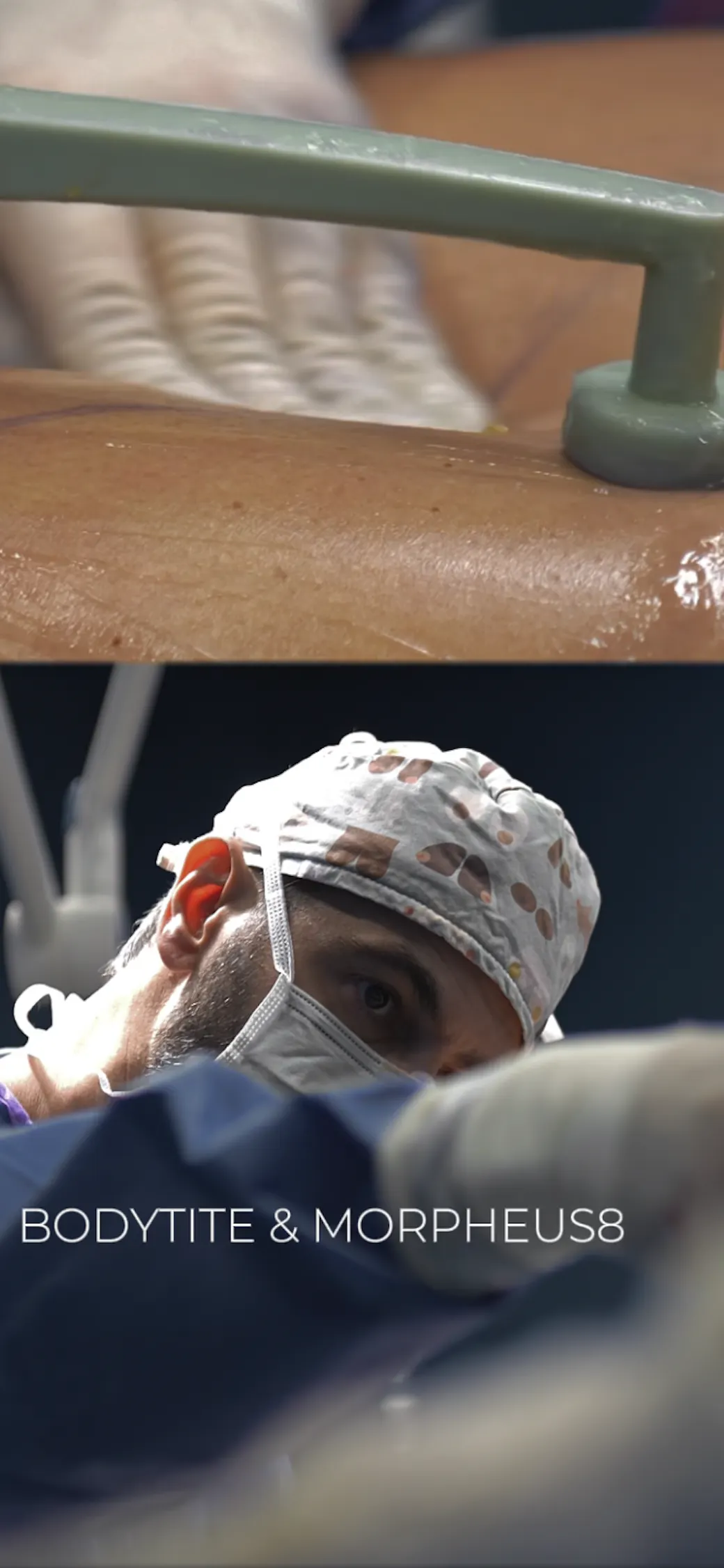
Skin Tightening and Tissue Contouring with BodyTite®
In cases of reduced skin elasticity or slight skin excess, the radiofrequency technology BodyTite® can be used as a supplement. By controlled heating of the tissue, skin tightening can be supported and the adjustment of the skin to the new body contour improved.
This can reduce skin excess in selected cases and further optimize the breast contour without the need for larger skin incisions.

Healing and Recovery Phase
The healing phase after a gynecomastia treatment depends on the technique used and the individual findings. Modern procedures often allow for a relatively quick recovery and an early return to daily life.
Especially with VASER®-assisted treatments, the tissue can be treated particularly precisely and gently. This can often lead to reduced swelling, fewer bruises, and a faster recovery phase. Even in combined procedures involving VASER®-assisted liposuction and removal of breast glandular tissue, many patients benefit from the advantages of modern tissue-preserving techniques.
After the treatment, a compression garment is typically worn for about 4 to 6 weeks. This supports the tissue's adjustment to the new breast contour and can positively influence the healing process.
Light daily activities are often possible again after a short time. The return to intense physical exertion or sports activities depends on the individual healing process and will be determined during the follow-up care.
The final result develops gradually during the healing process. As swelling decreases and the tissue adjusts, the new breast contour becomes increasingly visible.
Risks and Possible Complications
Like any surgical procedure, the treatment of gynecomastia carries risks. However, through careful diagnostics, precise surgical planning, and modern surgical techniques, these risks can often be reduced.
In particular, tissue-preserving technologies such as VASER®-assisted liposuction allow for precise treatment while being gentle on the surrounding tissue.
We will discuss the specific risks in your case and the measures taken to minimize these risks in detail during your personal consultation and medical briefing prior to the treatment.
Why Choose SA Aesthetics for Your Gynecomastia Treatment in Berlin?
Specialization & Expertise
Chief Physician Themistoklis Stavrakis, M.D., Specialist in Plastic and Aesthetic Surgery
The treatment of gynecomastia requires much more than just the removal of fat or breast gland tissue. The goal is to restore a naturally appearing, flat, and masculine breast contour that harmonizes with the entire upper body.
Years of experience in plastic and aesthetic surgery, along with a particular focus on body-shaping procedures, form the foundation of our treatment concept. Here, not only the reduction of volume is important, but especially proportions, contours, and a natural overall result.
Individual Analysis Instead of Standard Treatment
Each case of gynecomastia has different causes and anatomical conditions. Therefore, every treatment begins with a thorough analysis and an individualized surgical plan.
Modern Technologies and Tissue-Preserving Procedures
Depending on the initial situation, modern techniques such as VASER®-assisted liposuction, removal of breast gland tissue, or combined treatment concepts are used. The goal is precise contouring while treating the tissue as gently as possible.
Patient-Centered Approach at SA Aesthetics
Your well-being is at the center of our practice in Berlin. A warm, welcoming atmosphere and the highest medical safety standards ensure that you feel well cared for at SA Aesthetics.
Take the first step towards a more carefree life and schedule a non-binding consultation appointment. We look forward to seeing you!
Have we piqued your interest? Take the first step towards your ideal body and schedule your personal consultation at SA Aesthetics in Berlin today!
Results and Long-Term Effects
The surgical treatment of gynecomastia aims to restore a naturally appearing and masculine breast contour. The goal is to reduce female-looking breast tissue and create harmonious proportions that fit the individual body structure of the patient.
When Will I See the Results?
A change in breast contour is noticeable immediately after the treatment. However, the final result develops gradually during the healing process and becomes increasingly visible as swelling decreases.
Is the result permanent?
Removed breast gland tissue typically does not regenerate. Therefore, the results of surgical gynecomastia treatment can be permanent. A prerequisite for this is that no new triggering factors, such as hormonal changes, certain medications, or significant weight gain, occur.
Who is suitable for treatment?
Surgical treatment can be particularly beneficial for men whose enlarged breasts are persistent, do not respond to conservative measures, or are perceived as physically or psychologically burdensome.
Men who desire a more defined and masculine chest contour or who continue to struggle with feminine-looking breast contours despite exercise and weight loss can also benefit from treatment.
The prerequisites for a successful outcome are realistic expectations and an individual analysis of the underlying cause and anatomy.
Influence of lifestyle and weight
A stable body weight and a healthy lifestyle can help support long-term results. Particularly after a combined treatment involving VASER®-assisted liposuction and removal of breast gland tissue, many patients benefit from lasting harmonious and masculine chest contours.

Frequently Asked Questions (FAQ)
You might also be interested in.
Discover more treatments.


Would you like a personal consultation?
Do you want to know if treatment for gynecomastia is right for you or have questions about your individual situation? Chief Physician Themistoklis Stavrakis, M.D., specialist in Plastic and Aesthetic Surgery, will be happy to personally advise you in our practice clinic and develop a tailored treatment plan with you for a naturally appearing and masculine breast contour.